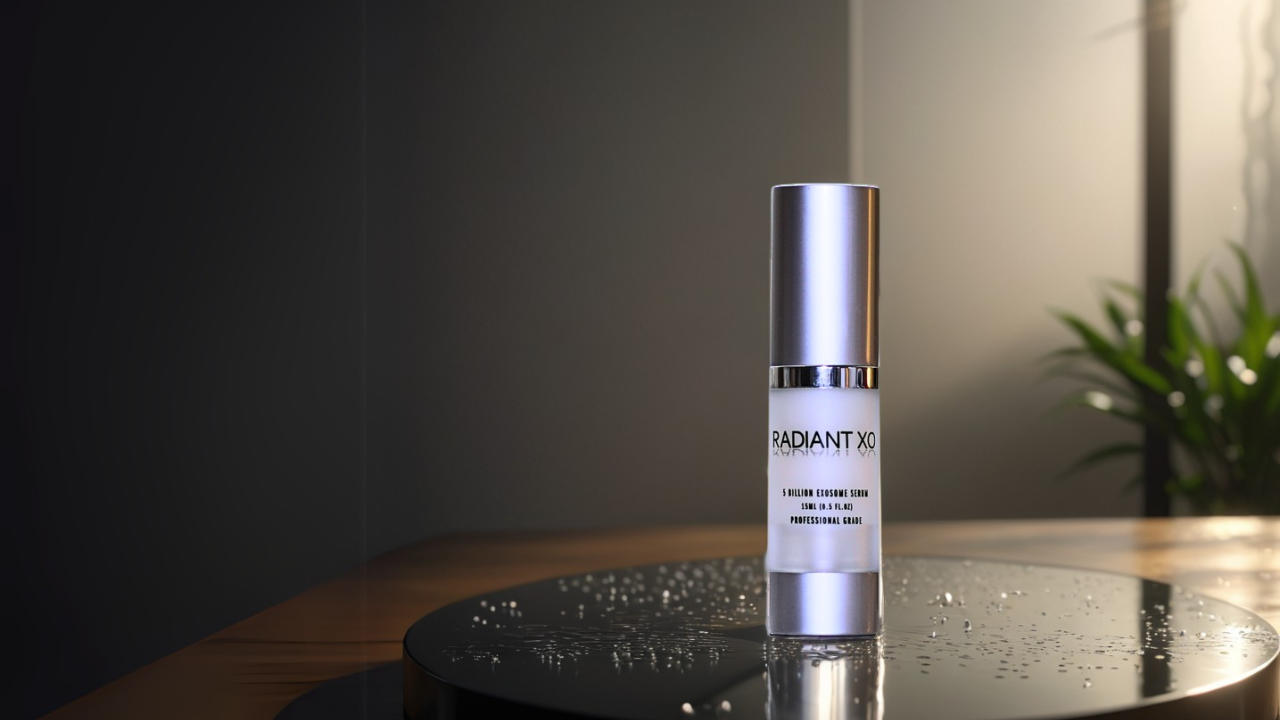
Article: What's Actually Inside RadiantXO? 20 Verified Proteins That Transform Your Skin
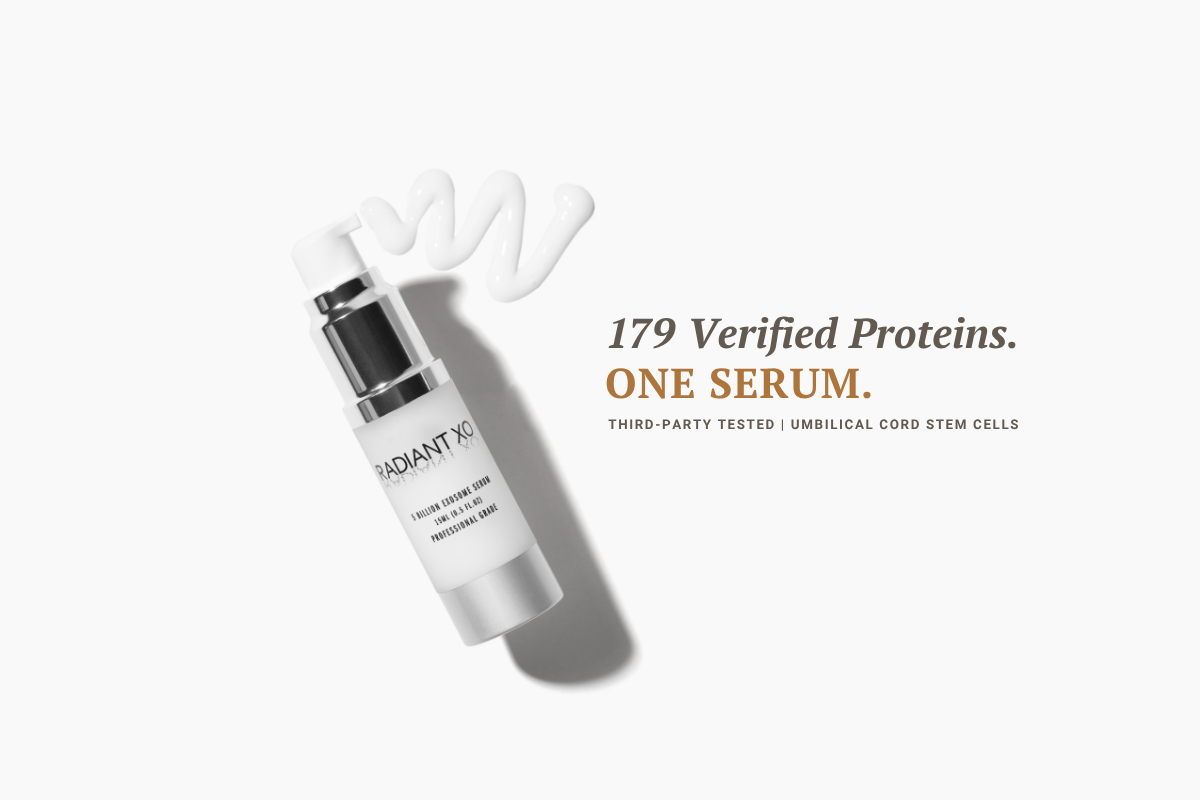
What's Actually Inside RadiantXO? 20 Verified Proteins That Transform Your Skin
Most skincare brands throw around words like "growth factors" and "regenerative" without ever showing you the proof. We do things differently.
Our exosome serum was independently analyzed by a third-party protein array laboratory, and the results identified 179 distinct bioactive proteins, all quantified by signal concentration. That data exists. We can show you the numbers.
Below are the 20 proteins from that verified analysis with the most direct impact on what you actually care about: collagen production, skin firmness, cellular renewal, anti-aging, and radiance. Every protein on this list is real, measured, and present in meaningful concentrations in your serum.
No marketing fiction. Just biology - explained in plain terms.
A Quick Note on How to Read This
The protein array measures signal intensity - think of it as a concentration score. The higher the number, the more of that protein is present in the formulation. For context: proteins scoring above 200,000 are classified as Very High Abundance. Above 100,000 is High Abundance. We'll note each tier as we go.
We also want to flag something important upfront: higher concentration doesn't always mean more important. Some proteins are extraordinarily potent at lower concentrations. Where that applies, we'll tell you.
The 20 Proteins That Matter Most for Your Skin
1. Collagen I Alpha-1 - Signal: 524,296 (Very High Abundance)
This is the most abundant protein in human skin and the most abundant protein in your serum - not by a little, but by a significant margin over all 179 proteins tested.
Collagen Type I is the primary structural protein of your dermis. It gives skin its tensile strength, its firmness, and that supple, plump feel that characterizes younger skin. From our mid-twenties onward, natural collagen production declines roughly 1% per year - which is precisely why skin loses density, develops fine lines, and begins to look less resilient over time.
The fact that Collagen I alpha-1 arrives as the dominant cargo in our exosomes isn't a coincidence. It aligns the serum's primary biological signal directly with your skin's primary structural need.
2. Collagen V - Signal: 261,166 (Very High Abundance)
Collagen V is the quality-control protein for Collagen I. It regulates how Collagen I fibrils are assembled - controlling their diameter and organization. Without it, Type I collagen forms irregularly, producing a weaker, disorganized matrix regardless of how much raw Collagen I is present.
Think of Collagen V as the architect making sure the bricks are laid correctly. The fact that our serum delivers both proteins at very high abundance means you're getting the raw material and the instructions for using it properly.
3. COL1A2 (Collagen I Alpha-2) - Signal: 190,694 (High Abundance)
Mature Type I collagen is a triple helix - built from two alpha-1 chains and one alpha-2 chain. COL1A2 is that second chain, and without it, the complete structure cannot be assembled.
Most collagen conversations in skincare stop at "Collagen I." Our serum delivers both subunits that make Collagen I functional, at high verified concentrations. That's a meaningful distinction rarely addressed in competitor formulations.
4. Collagen III - Signal: 126,554 (High Abundance)
When skin experiences stress, damage, or inflammation, Collagen Type III is the first structural protein deployed. It creates the initial scaffold that allows organized healing to begin. Over time, this Type III scaffold is gradually remodeled into the more permanent Type I - but nothing happens without that first responder arriving.
Collagen III is abundant in young, healthy skin and signals active regenerative activity. For skin that's lost its youthful resilience or is recovering from any kind of stress, this is the protein that starts the rebuild.
5. TIMP-2 - Signal: 193,422 (High Abundance)
Here's something most skincare brands don't talk about: building collagen is only half the equation. You also have to protect it from being broken down.
MMPs (matrix metalloproteinases) are enzymes naturally produced during UV exposure, inflammation, and the aging process - and their job is to degrade the extracellular matrix, including collagen. TIMP-2 (Tissue Inhibitor of Metalloproteinases-2) stops them.
At a signal count of 193,422, TIMP-2 is one of the highest-concentration proteins in the entire array. It's working quietly to preserve every other protein's contribution. Declining TIMP activity relative to MMP activity is a documented driver of skin aging - and restoring that balance is a legitimate, measurable anti-aging mechanism.
6. TGF-Beta 1 - Signal: 212,584 (Very High Abundance)
TGF-beta 1 is one of the most studied proteins in dermatology for good reason. It drives fibroblast activity, stimulates collagen production, modulates inflammation, and signals skin to transition from a breakdown state to an organized repair state.
In the MSC exosome context specifically, peer-reviewed research has documented TGF-beta 1 as a key immunomodulatory cargo - it promotes regulatory T cells that calm chronic skin inflammation, which is a root driver of both visible aging and skin sensitivity.
7. TGF-Beta 3 - Signal: 53,929 (Abundant)
TGF-beta has three isoforms - and they don't behave the same way. TGF-beta 1 and 2 tend to promote scar tissue during wound repair. TGF-beta 3 does the opposite: it promotes cleaner, smoother healing with significantly reduced scarring. This is well-established in the literature, and it's the basis of active research in post-procedure and scar-reduction skincare.
Our serum carries both TGF-beta 1 (remodeling) and TGF-beta 3 (scar-free healing) together - a biologically balanced pairing that supports repair without the textural irregularities that can follow.
8. EGF (Epidermal Growth Factor) - Signal: 134,484 (High Abundance)
EGF is arguably the most recognized growth factor in skincare. It drives the replication of skin surface cells (keratinocytes), accelerates the renewal cycle that keeps skin fresh and even-toned, and supports re-epithelialization after any kind of damage.
Many products list EGF as an ingredient. We can show you the number: 134,484 - third-party verified. That's the difference between a marketing claim and a documented measurement.
9. HB-EGF (Heparin-Binding EGF) - Signal: 174,847 (High Abundance)
HB-EGF shares EGF's receptor but binds with higher affinity and has a particular affinity for keratinocytes, fibroblasts, and smooth muscle cells - the cell types most directly involved in skin structure and wound repair. It's been studied as a wound-healing accelerant independent of standard EGF.
Here's what's notable: HB-EGF is actually present at a higher concentration than standard EGF in our serum. Together, these two EGF-family proteins create a layered, redundant signaling approach to skin cell renewal that no single-ingredient formulation can replicate.
10. FGF-7 / Keratinocyte Growth Factor - Signal: 125,961 (High Abundance)
FGF-7 is so selective for skin that it goes by a second name: Keratinocyte Growth Factor (KGF). It specifically stimulates the cells that form your skin's surface to proliferate and repair - it's one of the most epithelial-targeted growth factors in the human proteome. It's used clinically in post-procedure recovery protocols for exactly this reason.
Our serum carries 27 fibroblast growth factors in total - a direct result of our UC-MSC (umbilical cord) sourcing. Umbilical cord stem cells are naturally far richer in paracrine signaling molecules than older-generation adipose (fat-derived) or platelet-derived exosome sources. FGF-7 is one example of what that difference looks like in the data.
11. FGF-2 (Basic FGF / bFGF) - Signal: 144,405 (High Abundance)
Basic FGF is one of the most thoroughly studied wound-healing proteins in existence. It stimulates fibroblast proliferation, drives the formation of granulation tissue, promotes new blood vessel formation to feed healing skin, and supports the entire architecture of tissue repair.
For skincare purposes, bFGF is associated with dermal thickening, improved skin texture, and accelerated recovery. Its presence at high abundance in our non-lyophilized (never freeze-dried) formulation ensures it arrives in bioactive form - not reconstituted from powder as in many competing exosome products.
12. HGF (Hepatocyte Growth Factor) - Signal: 146,121 (High Abundance)
HGF has a unique dual role: it promotes active tissue regeneration and inhibits fibrosis - the excessive scar tissue that can result from inflammation. In skin, that balance is everything. You want repair without over-thickening, renewal without textural damage.
HGF is also potently anti-inflammatory, which makes it especially relevant for skin dealing with chronic redness, sensitivity, or inflammatory aging. It's one of the more sophisticated cargo proteins in the serum - not a headline name in most skincare discussions, but doing significant work behind the scenes.
13. VEGF-A - Signal: 101,706 (High Abundance)
VEGF-A is the master regulator of blood vessel formation and maintenance. This matters more for skin appearance than most people realize. The glow and vitality of healthy skin reflects active microcirculation - robust blood flow feeding skin cells with oxygen and nutrients.
Dull, sallow, or tired-looking skin is often, at a biological level, skin with poor microvascular perfusion. VEGF-A supports the vascular infrastructure that determines skin tone, luminosity, and overall vitality from the inside out.
14. PDGF-AB - Signal: 136,226 (High Abundance)
If you've ever looked into PRP (platelet-rich plasma) facials, PDGF is a core reason they work. Platelets release PDGF at wound sites as a primary healing signal - it recruits fibroblasts, drives connective tissue repair, and initiates the organized regeneration cascade.
Our serum delivers PDGF-AB alongside PDGF-BB and full receptor coverage - a complete PDGF signaling axis. This is the kind of growth factor depth that only biological sourcing can provide. No synthetic formulation replicates a functional PDGF axis.
15. IGF-I (Insulin-Like Growth Factor 1) - Signal: 87,445 (Abundant)
IGF-I is one of the primary mediators of growth hormone's effects on tissue. It drives anabolic signaling - stimulating cells to grow, divide, and build new matrix - in skin, bone, and muscle alike. IGF-I declines with age as part of the natural hormonal slowdown, and that decline correlates with reduced dermal thickness, slower cell turnover, and diminished skin resilience.
A note on the count: 87,445 is lower than other proteins on this list, but abundance count is not biological importance. IGF-I is extraordinarily potent at lower concentrations - the scientific literature is unambiguous on this. The serum also delivers IGF-II at very high abundance (299,076) and the full complement of binding proteins that regulate IGF availability - the entire axis, not just one isolated molecule.
16. LTBP1 & LTBP2 - Signals: 299,060 and 309,658 (Very High Abundance)
These two proteins deserve a mention because they explain something most exosome skincare brands never discuss: how TGF-beta actually gets activated in your skin.
LTBP1 and LTBP2 (Latent TGF-beta Binding Proteins) anchor TGF-beta in the extracellular matrix and control its timed release. They are the difference between measured, organized remodeling and dysregulated signaling that can cause irritation or fibrosis.
Both are among the top 6 of all 179 proteins by concentration. Their presence ensures TGF-beta signaling is controlled and sustained - which is exactly why users experience steady, compounding improvement with consistent use rather than a dramatic but fleeting response.
17. Amphiregulin - Signal: 74,362 (Abundant)
Amphiregulin is an EGF-family protein with a distinct personality: rather than driving aggressive cell proliferation, it promotes long-term epithelial homeostasis - skin staying balanced, well-maintained, and resilient under stress.
It's particularly relevant for sensitive skin types. Amphiregulin is released by the immune system and stem cells in response to tissue stress, functioning as a calming, stabilizing repair signal. It complements the more proliferative growth factors in the serum, contributing to why the formulation is effective without being reactive.
18. COL7A1 (Collagen VII) - Signal: 51,494 (Abundant)
Collagen Type VII forms the anchoring fibrils at the dermal-epidermal junction - the structural interface between your skin's surface layer and the deeper dermis. Without these anchors, the epidermis becomes fragile and unattached. Mutations in this protein cause a severe skin fragility condition (epidermolysis bullosa), which illustrates just how critical it is to structural skin integrity.
For RadiantXO customers, COL7A1 contributes to that feeling of skin that feels solid, firmly anchored, and resilient - rather than thin, crepey, or loose at the surface.
19. FGF-5 - Signal: 205,994 (Very High Abundance)
FGF-5 is the fibroblast growth factor that specifically regulates the hair follicle cycle - governing when follicles transition through the various phases of growth. It's an active area of research in hair restoration science.
For customers applying the serum to the hairline, brows, or scalp as an adjunct treatment, FGF-5 at very high verified abundance is a meaningful biological signal with direct relevance to follicle biology. It's one more application area where the 179-protein depth of our cargo outperforms any single-molecule or synthetic formulation.
20. S100A6 (Calcyclin) - Signal: 291,504 (Very High Abundance - 7th highest overall)
S100A6 is a calcium-binding protein that governs how cells respond to stress - regulating proliferation, cytoskeletal stability, and cellular resilience under oxidative and inflammatory load.
For skin, this translates to a kind of underlying biological robustness: skin that handles UV exposure, environmental aggressors, and the chronic low-grade inflammation of aging with greater composure. At the 7th highest concentration of all 179 proteins tested, S100A6 is a major component of our cargo - and a compelling illustration of why the effect of a true exosome serum is broader and more durable than what any targeted "hero ingredient" can deliver alone.
Why This Data Matters - and Why We're Showing It to You
The exosome skincare category has a trust problem. Terms like "stem cell," "growth factor," and "regenerative" get attached to products with no independent verification, inconsistent sourcing, and formulations that may have been freeze-dried into inactivity before they ever reached you.
Our approach is different in three concrete ways.
Source: We use exosomes derived from umbilical cord mesenchymal stem cells, the most scientifically validated and biologically rich source available. Not adipose (fat cell) waste. Not platelet derivatives. The source matters because it determines what proteins are actually present.
Preservation: Our serum is non-lyophilized, meaning it has never been freeze-dried and reconstituted. Freeze-drying is a common cost-cutting measure that degrades protein bioactivity. We preserve our exosomes in a glycerin suspension that maintains the integrity of the cargo you just read about.
Proof: Every protein referenced in this article comes from a third-party protein array analysis conducted by an independent laboratory. The signal counts are real measurements - not estimates, not marketing language. We can show you the data because we have the data.
179 proteins. One verified formulation. No guesswork.
Ready to Experience the Difference?
If you've been looking for a serum that earns its price tag with science rather than packaging, this is it. Your skin deserves ingredients that are proven to be there - at concentrations that actually matter.
Shop the RadiantXO Exosome Serum
The protein abundance data cited in this article derives from a third-party protein array analysis of the specific exosome lot used in RadiantXO's formulation. Signal counts reflect protein array intensity and are not absolute molar concentrations. Detection confirms presence and approximate relative abundance. This content is educational and does not constitute a medical claim. Statements have not been evaluated by the FDA.